
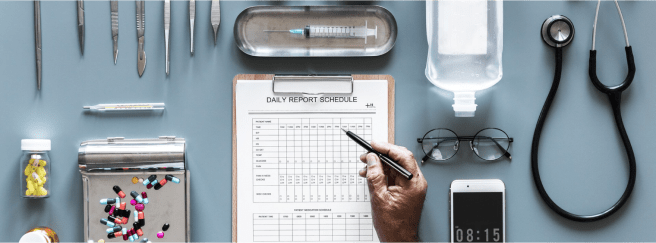
To get the ball rolling and book the IVF procedure, we had some prerequisite testing that the clinic wanted us to do. This provides information about A*’s fertility to allow our fertility specialist, Dr. T, a peek at what they’re getting themselves into. Living in Canada, we decided to go to our family doctor to get the tests and bloodwork required. For patients who don’t have access to a family doctor, or would have excessive charges associated with the tests, there is an option to get these through the clinic by going 5 days early. This is prior to any IVF related procedures, and they will complete all the testing on-site, for an additional fee. The tests must be done within so many months of the starting IVF, and in our case they wanted to see the results before we could proceed to booking.
A* had put off going to the doctor for quite a while. She was young and healthy; and in a province strained for doctors, it seemed wasteful to do useless check ups. She had the same family doctor since she was a little girl, but that doctor recently retired. The doctor that took her place, Dr. M, took on all of her patients initially but then began to cut those who hadn’t checked in with the new doc. When A* called to book an appointment, she learned that she was one of the ones who had gotten the chop. Luckily, a little sweet talking with the receptionist got her back on the books, with the very clear warning: If we were so much as a minute late for this, we’re out!
Be on time, check.
The testing the fertility clinic wanted done was as follows:
1. STD Panel – Any day of cycle; any lab; fasting; no older than 12 months before the IVF cycle. Blood work for: HIV, Hepatitis B & C, VDRL/RPR
2. Hormonal Profile – Second or third day of your menstrual cycle/spotting or bleeding. If you don’t know you cycle days, then anytime; any lab; fasting; nor older than 6 months before the IVF cycle. Blood work for: Estradiol, LH, FSH, Prolactin
3. Anti-Müllerian Hormone (AMH) – Any day of cycle; any lab; fasting; no older than 6 months before IVF cycle.
4. Trans-Vaginal Ultrasound – Optional, included in first appointment
5. PAP Smear – No older than 12 months before the IVF cycle.
6. Vaginal Cultures – Trichomonas, Mycoplasma, Chlamydia, Gonorrhea
We also needed a prescription for birth control to last until the IVF cycle would begin, to help time A*’s cycle for both the pre-IVF testing and the stimulation phase of IVF.
The appointment went fine. It was the first introduction to A*’s new doctor, Dr. M, who is the doctor that will be working with us throughout her hopeful pregnancy. We spoke a bit about our choice to travel to Mexico for the IVF procedure, and then he completed the PAP and filled out the required paperwork to get the bloodwork done. We got the bloodwork done that afternoon, after which it was just a matter of waiting for the results to come in.
Two and a half weeks later we were called in to discuss the results. Everything checked out, except the Anti-Müllerian Hormone (AMH) test. It wasn’t done. It wasn’t anything specific to worry about, just that the province refused to run the test and offered no reason why (thanks for that, guys). This hormone is a marker of ovarian reserve, and a higher AMH level would indicate a higher number of eggs left. It seems that in a government funded health care system, young(ish) women have no business inquiring about their quantity of eggs remaining, even when ordered by a doctor for fertility treatments (again, really super job there, province). Dr. M gave us the go-ahead, and everything was forwarded to the fertility clinic. Dr. T at the clinic agreed the test results looked fine but now needed A* to come down 4-5 additional days at the beginning of the cycle so that they could run the AMH test that was refused here (did I forget to mention how truly stellar our province is? Round of applause everyone, please). This test would be at an additional cost to our original quote. (We’ll do a separate post on the costs of everything later on for those also weighing their options to conceive.)
Christmas break was upon us at this point and we were bursting to tell our family and friends about our plans. Although we opted to share some details with a select few friends, we ultimately kept the news to ourselves. We went on holidays to an all inclusive resort for New Year’s and were ecstatic planning and talking about our future-family the whole time. So it was with considerable surprise when, upon arriving home from vacation, we received a call from a local gynaecology clinic to which A* was referred to for a colposcopy. This was the first we heard of this, nearly four weeks after getting the go ahead from Dr. M, but all the receptionist could tell us is that A* was referred because of an abnormal PAP. Thus ensued a long and confusing morning with multiple phone calls before Dr. M was able to call back and explain. Yes, he did refer A* to a gynaecologist, Dr. V, for follow up. Results had come in, much later than our original appointment, that indicated high grade cell changes (HSIL) on A*’s PAP. Dr. M knew about our plans for IVF, and so he referred us to a specialist right away despite not being able to reach us during our vacation. What we understood at this point was that precancerous cells were found on A*’s cervix and we would have to go for a closer examination (a colposcopy) possibly followed by 1 or more biopsies. We now had exactly 3 weeks to read horror stories online and scare ourselves half to death until the colposcopy appointment.
Fast forward 3 weeks, and we are sitting in Dr. V’s office. We discuss our options vis-à-vis IVF and what these cell changes might mean for A*’s fertility. Dr V completes the colposcopy, and she does find 4 areas of concern for biopsy. She uses a tool that looks like a tiny Pac-Man to “chomp” them off, puts the specimens in jar, and we discuss what happens from here. The very best outcome, that the colposcopy shows nothing at all, is now off the table. There’s something there.
There are ultimately 3 different outcomes, which I’ll list from worst to best. The absolute worst case scenario is full blown cervical cancer, which could mean a full hysterectomy, chemo and radiation and would mean A* could never conceive a child. Obviously this isn’t the scenario we’re hoping for (or expecting), and Dr V was very clear that biopsies collected during colposcopy rarely show invasive cancers. If this is the case though, we will still follow through with the egg retrieval on this trip to preserve A*s eggs and use them in a reciprocal IVF where I will carry any little A*s. The second, not nearly as drastic option leaves us with precancerous areas that will need to be removed sooner rather than later. In this scenario, a Loop Electrosurgical Excision Procedure (LEEP) will be done to remove the abnormal cells from the cervix. In this case, Dr. V recommended we again follow through with the retrieval and then wait at least three months to allow the cervix to heal before conceiving. We’re not opposed to another trip to sunny Mexico in the summer, but ideally would still like to do the transfer following the retrieval, as planned. The third, final, and best scenario is that the cell changes are nothing major to worry about at this point, A* is cleared to go ahead with pregnancy, if successful, and we will monitor any changes in the cells during the nine months. A month or so post-delivery, a LEEP will be performed to remove the troublesome cells, followed by a PAP at 6 months. If that PAP is clear, A* goes back to a normal PAP schedule. If more HSIL cells are found, another LEEP will be ordered to remove and repeat this until a clean PAP.
As of today it’s been six weeks since we’ve started worrying about this. Six weeks of wondering if we’re doing the right thing by booking now. Six weeks of worrying that if we don’t do it now we may not get to. Six weeks of worrying about A*, and hoping this is all just a big scare over nothing. We get the biopsy results on February 20, just a few days before we leave.
T – 7 days until we step on a plane to do the biggest thing we’ve ever done in our lives.
T – 3 days until we find out what that’s even going to look like.
It’s crunch time.
* * *
Up to this point we’ve been playing catch up with our blog. We tossed around the idea of starting one, but hadn’t put it into action. We’d made some huge decisions towards starting a family, but all in all, nothing had been done yet. Which brings us to now: we are booked for the IVF procedure in Mexico from February 25, 2019 – March 25, 2019.

 Pride & Joy Family